



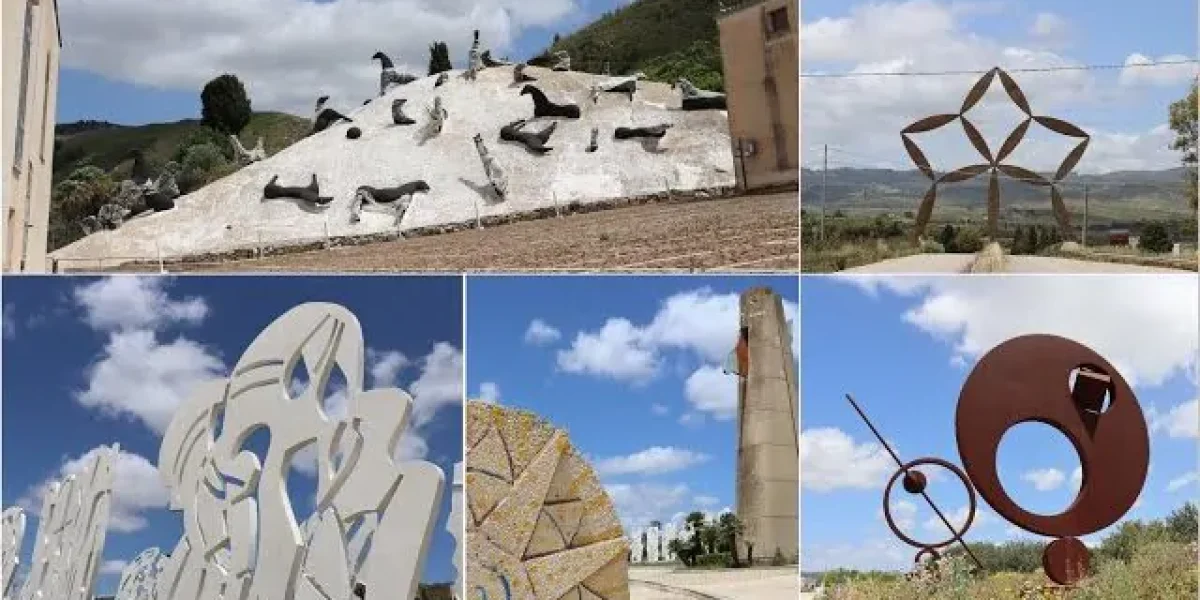
Gibellina has officially been proclaimed the Italian Capital of Contemporary Art 2026, a national recognition that celebrates its unique path of art, memory, and rebirth. This title rewards a city that, after the 1968 earthquake, chose to rebuild itself through creativity, transforming into a true open-air museum.
The winning project, titled “Bring Me the Future”, convinced the Ministry of Culture thanks to an innovative vision that combines urban regeneration, cultural engagement, and territorial promotion. Throughout 2026, Gibellina will host events, exhibitions, installations, and new spaces dedicated to contemporary art, making it one of the most interesting cultural destinations in Italy.

Gibellina’s Identity: History and Artistic Vision
Gibellina represents one of the most fascinating examples of cultural rebirth in Italy. The old town was destroyed by the 1968 earthquake and, instead of rebuilding on the same site, a new settlement was created about eleven kilometers away: Gibellina Nuova.
This reconstruction was not conceived merely as an urban project, but as a collective artistic endeavor. The mayor at the time, Ludovico Corrao, transformed tragedy into vision by inviting internationally renowned artists, architects, and intellectuals to contribute to the creation of a completely new town, imagined as an open-air museum.
Thanks to the work of figures such as Pietro Consagra, Alberto Burri, Franco Purini, Laura Thermes, Ludovico Quaroni, and many others, Gibellina developed a unique identity in Italy—a place of experimentation, contemporary culture, and innovative architecture.
The iconic “Porta del Belìce”, created by Consagra, welcomes visitors at the entrance to the town as a symbol of rebirth and openness to the future.
What to See in Gibellina: Art, Architecture, and Memory
Gibellina is an ideal destination for travelers seeking a journey that blends landscape, historical memory, and contemporary art. Here are the main highlights:
Cretto di Burri
This is the most iconic artwork of the area and one of the largest land-art installations in the world. Alberto Burri covered the ruins of old Gibellina with large white concrete slabs, following the layout of the former streets. The result is a powerful monument—a place of silence and memory where art and history merge with the landscape.

Porta del Belìce – Pietro Consagra
A monumental sculpture marking the entrance to Gibellina Nuova, symbolizing the passage from destruction to renewal. It is one of the artist’s most recognizable works and one of the most photographed spots in the city.
Fondazione Orestiadi & Baglio Di Stefano – Museum of Mediterranean Weaves
Located within the Baglio Di Stefano complex, this is one of the most significant museums dedicated to artistic and cultural relations across the Mediterranean. Founded by Corrao, the Orestiadi Foundation hosts collections, exhibitions, festivals, and cultural activities throughout the year, making it a key place for understanding the dialogue between Mediterranean traditions and contemporary art.
Squares, buildings, and urban installations
The entire town is an artistic itinerary: churches, scenic squares, integrated sculptures, and experimental urban designs make Gibellina a unique place in Italy. Walking through its streets means entering a vast creative laboratory born from one of the most important cultural reconstruction efforts of the twentieth century.
